
Scabies shows up as intense itching, a rash and burrows in the skin. A timely and accurate diagnosis stops it spreading and makes sure the right treatment is used. These are the methods healthcare professionals use.
Clinical examination
The first step is a careful look at the skin and a few questions. Key signs are intense itching, especially at night, and burrows or tracks between the fingers, on the wrists, elbows and genital area. Recent contact with someone who has scabies is an important clue.
Dermatoscopy
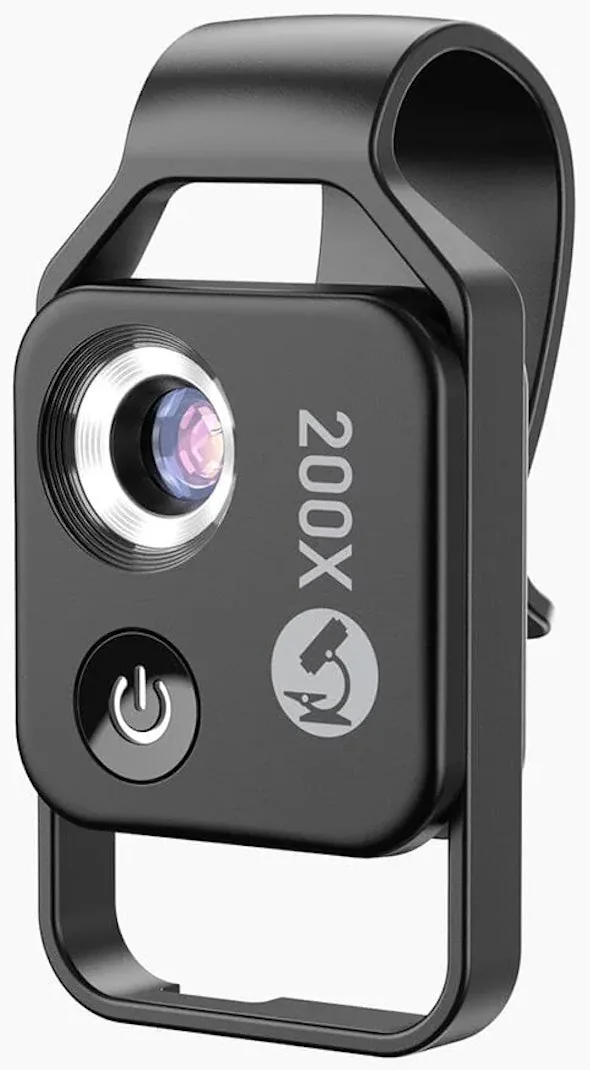
A dermatoscope magnifies the skin so a clinician can see the typical "delta wing" or "jet with contrail" shape at the end of a burrow. Mobile phone microscopes have also proven useful.
Microscopic examination
A skin scraping from a suspected burrow is examined under a microscope for mites, eggs or droppings. Finding them confirms the diagnosis.
Adhesive tape test
Clear adhesive tape is pressed onto the affected skin, then examined under a microscope to look for mites and eggs.
Burrow ink test
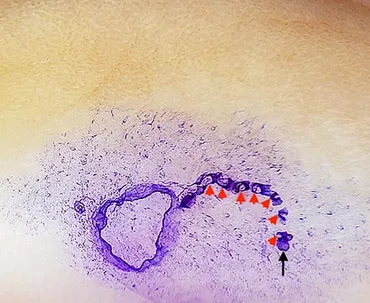
A suspected burrow is rubbed with ink from a marker pen, and the excess is wiped off with an alcohol swab. If a burrow is present, ink fills the tunnel and shows its typical S-shape.
Other tests
IgE blood tests and PCR testing for mite DNA can support the diagnosis in difficult cases, but they are not widely used and PCR is mostly a research tool.
Common mistakes in diagnosing scabies
| Mistake | Why it matters |
|---|---|
| Mistaking it for something else | Scabies can look like eczema, psoriasis, contact dermatitis or a fungal infection. |
| Shallow skin scrapings | A scraping that is too superficial can miss the mites. Several sites improve the chances. |
| Trusting one negative test | Mites are elusive. A single negative scraping does not rule scabies out. |
| Missing unusual presentations | Babies, older people and people with weak immune systems may have crusted scabies with little itching. |
| Ignoring contacts | Household members and partners need checking and treating too. |
| No follow-up | Checking back makes sure treatment worked and catches re-infestation early. |
If you think you have scabies, a doctor, clinic nurse or pharmacist can confirm it. Skabi-Rid is available without a prescription once you know what you are treating.
S0 Skabi-Rid is a registered medicine (Reg. No. A40/13.2/0756). Read the package insert before use. If symptoms persist, see your doctor or pharmacist.