
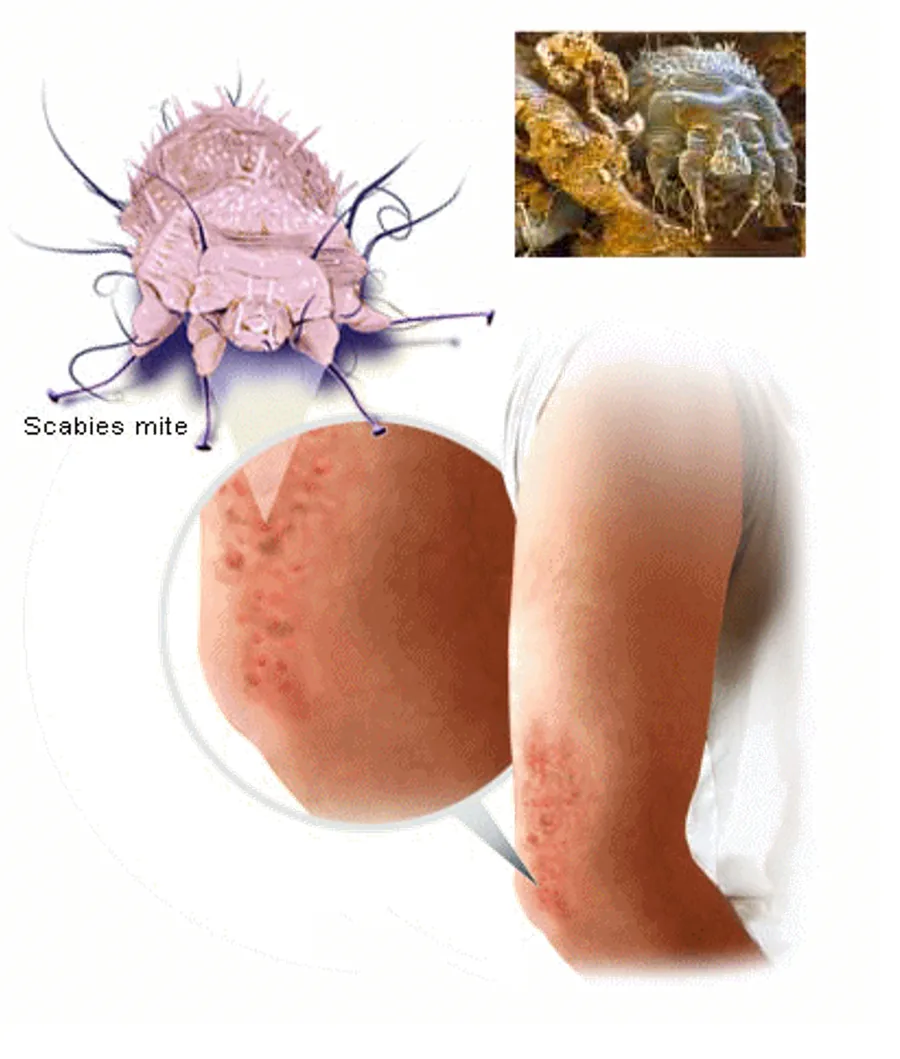
Scabies is a parasitic infestation of the skin by a microscopic, eight-legged mite called Sarcoptes scabiei. At about 0.3 mm long it is barely visible. The female mite burrows into the top layer of the skin to lay her eggs, and the whole life cycle happens there. The body reacts with an intense, itchy rash, usually worse at night.
Signs and symptoms
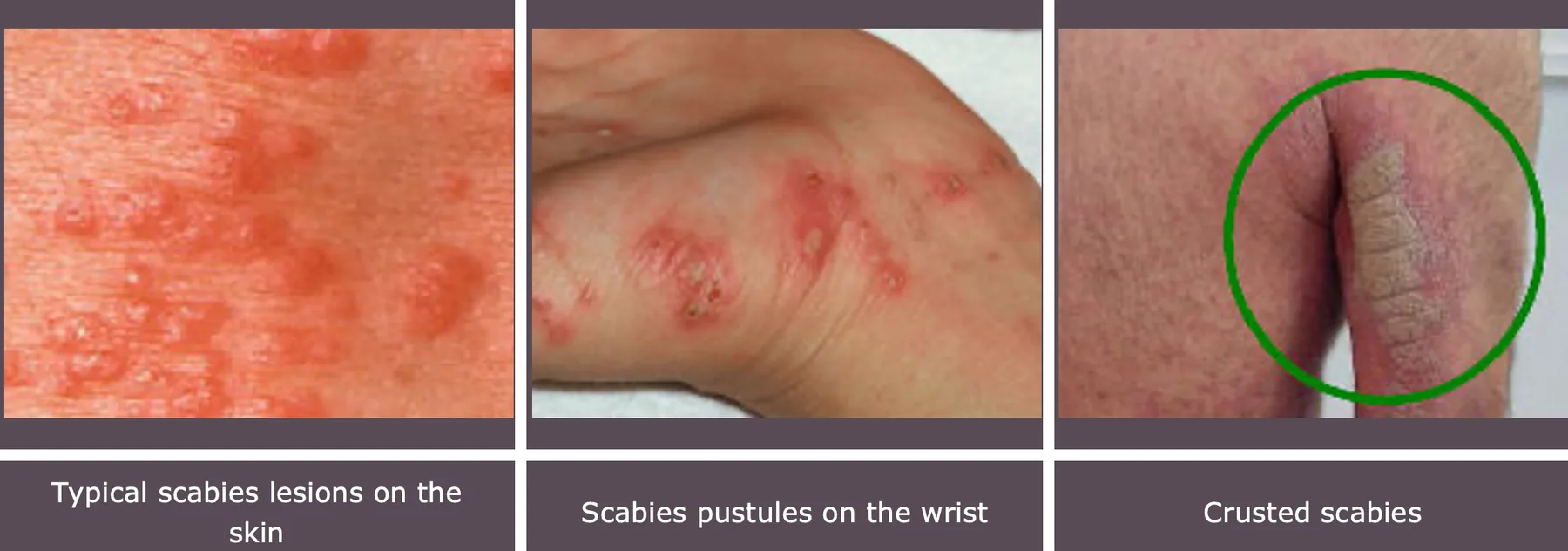
- A severely itchy rash with red patches, small bumps or tiny blisters.
- Most often between the fingers, around the wrists, on the elbows, armpits, navel, nipples, lower abdomen and genitals.
- Itching under rings, bracelets and watch straps, where mites like to hide.
- Curvy white or thin red lines where mites have burrowed. These are visible in only about 25% of people.
- Itching that is worst at night or after a hot bath.
- Scabs over scratched areas, which can become infected.
The face is usually not affected, except in babies. Scabies can look like eczema, psoriasis, contact dermatitis or a fungal infection, so ask a healthcare professional if you are not sure. Read how scabies is diagnosed.
Who can get scabies?
Anyone, regardless of age, sex or standard of hygiene. Mites move between people through direct, prolonged skin-to-skin contact: sharing a bed, close family contact, children playing together, sexual contact, or living close together in hostels and care homes. A quick handshake or hug usually will not spread it. Spread through clothing or bedding is rare, and human scabies does not come from animals.
Crusted (Norwegian) scabies
Crusted scabies is a severe, highly contagious form. The hands, feet and body become scaly and crusted, with very large numbers of mites under the crusts, and there may be little or no itching. It is seen more often in older people and people with a weakened immune system, and needs a doctor's care.
How scabies is treated
Over the years many products have been used, including sulphur ointment, monosulfiram, benzyl benzoate and lindane. Permethrin 5% applied to the skin is now the treatment of choice and has been used as first-line treatment in the developed world for many years. A Cochrane review of treatment trials found permethrin to be the most effective topical treatment for scabies.
Treat everyone at the same time. People in the same home, or in close contact, should be treated on the same night whether or not they have symptoms. Re-infestation from an untreated person is one of the most common reasons scabies keeps coming back.
Other treatments you may hear about
| Treatment | What to know |
|---|---|
| Benzyl benzoate lotion | Used for more than 50 years. It needs more than one application, which makes it harder to complete the treatment correctly. |
| Lindane | Banned for the treatment of scabies in South Africa because of its toxic effects on the nervous system. |
| Monosulfiram | Mostly used as a soap and not effective on its own. |
| Ivermectin | A medicine taken by mouth. Not readily available in South Africa for scabies. |
S0 Skabi-Rid is a registered medicine (Reg. No. A40/13.2/0756). Read the package insert before use. If symptoms persist, see your doctor or pharmacist.